About the Computing Conference
AI, HPC, Quantum, Cloud, Edge, and Sustainable Computing
The Computing Conference has convened the global computing research community since 2013, now in its 15th edition. It brings together leading minds across AI, high-performance computing, quantum computing, and cloud and edge systems to advance foundational models, next-generation architectures, and scalable systems with real-world impact.
The conference offers a top-tier platform for peer-reviewed contributions, critical cross-disciplinary dialogue, and frameworks that shape future inquiry in the field. It maintains a selective acceptance rate of 37-39%.
Hosted annually, the Computing Conference brings together scientists, scholars, researchers, industry leaders, and technology professionals from around the world to explore and shape the future of computing.

Attended by researchers from the world's most prestigious universities
Why attend this computer science conference?
Proceedings
Proceedings will be published in Springer series "Lecture Notes in Networks and Systems".

Awards
The conference recognizes outstanding papers and posters presented at the conference. Awards are presented across various categories, with recipients recognized during the conference closing.
Keynote Talks
Our speakers represent the cream of computing research and development practitioners.
International Audience
Join a vibrant international community from 60+ countries on Cloud Computing, and HPC Conferences.

Past Speakers
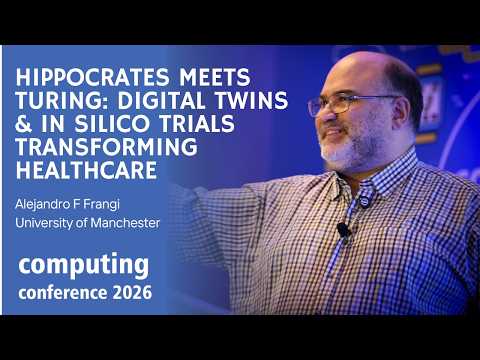
A selection of past keynote talks from Computing Conference.





Previous Editions
Explore past editions of Computing Conference.
Frequently Asked Questions
See the Call for Papers page for tracks, deadlines, formatting templates and submission instructions.
- Manuscripts should not exceed 18 pages for the main text (excluding references and appendices of up to 7 pages). Submissions that surpass this limit may be considered at the discretion of the chair, especially for review or survey articles.
- Manuscripts must present original research and align with the conference's scope and topics.
- The abstract should adhere to the 150-250 word limit as per the conference guidelines.
- Authors are responsible for ensuring the accuracy of all quotes, citations, figures, maps, and tables included in their manuscript.
- Figures and tables should be placed within the manuscript at the appropriate locations where they are referenced, and they must be clear and legible.
- All figures, tables, references, appendices, algorithms, annexures, and supplementary materials must be clearly numbered, properly cited in the text.
- Tables must be neatly aligned within the page margins and must not overflow the page boundaries.
- Figure captions and table headings should be concise, unique, and ideally limited to a maximum of two lines.
- References should be formatted correctly and consistently, including all the necessary details such as author names, paper titles, publication sources, and years. Every reference listed must be cited in the main text.
- The use of foreign languages in the manuscript is not allowed unless accompanied by a corresponding English translation.
- The manuscript must follow the formatting guidelines provided in the template.
Submissions will undergo an anonymous (double-blind) review process. As such, your manuscript should not reveal your identity or affiliation. Specifically, you must remove author names and affiliations, anonymize citations and references to your previous related work, and exclude any funding or acknowledgments.
Each paper will be reviewed by at least three regular program committee members or two senior program committee members. Acceptance will be determined based on the paper's novelty, technical depth, elegance, impact (both practical and theoretical), and quality of presentation.
- Original: The paper should introduce a new idea, project, or issue, offer fresh insights into existing research, present original findings, or provide a novel perspective on existing information.
- Engaging: The presentation should engage the audience and be interactive, or address community needs in a way that is likely to attract a large audience to the conference.
- Significant: The paper should address key issues related to enhancing the effectiveness of current techniques, and its content should be clear and widely applicable.
- Quality: Claims made within the paper should be backed by sufficient data, reference relevant existing work, and transparently acknowledge any limitations.
- Clear: The outcomes of the paper should be easily understood.
- Relevant: The paper's topic should be aligned with at least one of the conference’s designated tracks.
The Microsoft CMT service was used for managing the peer-reviewing process for this conference. This service was provided for free by Microsoft and they bore all expenses, including costs for Azure cloud services as well as for software development and support.
The conference permits the responsible use of Generative AI (GenAI) tools in manuscript preparation. Authors are required to observe the following:
- Declare Usage – Any use of GenAI must be disclosed in the manuscript (e.g., in a Declaration on Generative AI section).
- Maintain Responsibility – Authors must critically review and edit AI-assisted text; unedited AI output is not acceptable.
- No AI Authorship – GenAI tools cannot be listed as authors. Authorship is limited to humans who take full responsibility for the work.
- Limit Role of AI – GenAI may support drafting and language refinement, but the development of scientific ideas, arguments, results, and conclusions must be carried out by human authors.
- Accountability – Authors remain fully accountable for the accuracy, originality, and integrity of their manuscripts.
Note: Non-compliance with these guidelines will be treated as academic misconduct and may result in the removal of published work.
For security purposes, the conference has policy for issuing official Visa Support Letters as follows:
- Visa Support Letters will be issued only after you have successfully registered and paid for your conference.
- Visa Support Letters can only be issued for registered attendees of the conference. Unfortunately we cannot issue Visa Support Letters for guests of attendees.
Visa Support Letters will be issued via email in PDF format. Please contact the Conference Manager at [email protected] to arrange for a Visa Support Letter. You must include:
- Your name as appears on your passport
- Your Date of Birth
- Your Passport Number
- Passport Date of Issue
- Passport Date of Expiry
- And, if you are an author of an accepted paper or poster, please provide the title.
Note: Obtaining a Visa Support Letter from SAI Computing Conference will not guarantee that your U.K. visa application will be approved. The letter is merely supplementary information that explains a visa applicant's intended purpose of travel to United Kingdom.
Registration Categories
- Author: Authors are those presenting a paper at the conference. Each author registration allows presentation of one paper only, and includes access to keynotes, paper sessions, and all conference activities.
- Participant: Participants are attendees who do not submit or present a paper but wish to attend presentations, keynotes, and sessions.
Payment Information
- Registration fees must be paid in advance. We accept most major international credit and debit cards.
- Payments can also be made via bank transfer. If you wish to pay by bank transfer, please contact us at [email protected] to request an invoice with the necessary payment details.
Registration Policy
- Each registration is valid for one delegate only.
- Each author registration permits the presentation of one paper.
- All registrations are final and non-refundable.
- Registrations are non-transferable to another delegate.
What People Say
“It was a fantastic opportunity to connect with a vibrant international community of scientists, researchers, and industry leaders from over 60 countries. I am leaving the conference feeling incredibly inspired and ready to apply these new perspectives to my own work and research. I also want to give a special shoutout to the other attendees for the great conversations, shared insights, and for making the experience so memorable.”
“Great conversations, fresh ideas, and plenty of fun along the way!”
Photos from 2026
Conference Tracks
Computing Architectures
- Quantum Computing
- High Performance Computing (HPC)
- Edge and Fog Computing
- Cloud Computing
- Neuromorphic Computing
- Heterogeneous Systems
- Cyber-Physical Systems
- Green Computing
- Human-centred Computing
- Digital Twins
Machine Learning
- Deep Learning
- Large Language Models (LLMs)
- Foundation Models
- Federated and Distributed Learning
- Agents and Multi-agent Systems
- Explainable AI
- Causal AI and Reasoning
- Computational Optimization
- Swarm Intelligence
- Sustainable AI
Human-Computer Interaction
- Human-Computer Interaction (HCI)
- Image and Video Analysis
- Multimodal Interaction Systems
- Gesture and Voice Interfaces
- Spatial Computing
- Brain-Machine Interfaces
- Assistive and Adaptive Interfaces
- Augmented Reality (AR)
- Virtual Reality (VR)
- UX and Design in AI Systems
Data Science
- Big Data
- Predictive Analytics
- Data Fusion
- Sentiment Analysis
- Natural Language Processing
- Information Retrieval
- Synthetic Data Generation
- Data-centric AI
- Data Mining
- Data Governance
Robotics & Embodied AI
- Robotics and Automation
- Human-Robot Interaction
- Brain-Computer Interfaces
- 5G/6G Network Evolutions
- Autonomous Vehicles and Drones
- Affective Computing
- Cognitive Architectures
- Robot Perception and Navigation
- Embodied AI
- Bioinformatics
Cybersecurity
- Cryptography
- AI for Cybersecurity
- Intrusion Detection
- Secure Protocols
- Privacy-preserving Machine Learning
- Bias Mitigation
- Zero Trust Architectures
- Blockchain and Decentralized Security
- Post-Quantum Security
- Surveillance, Ethics, and Regulation
Computing for Society
- Smart Cities
- Intelligent Transportation Systems
- Smart Grids and Energy Networks
- AI for Climate Modeling
- Green ICT
- Ambient Assisted Living
- Wearable Technology
- Tech for Public Health
- Digital Transformation
- Ethical AI
Education Technology
- Intelligent Tutoring Systems
- Adaptive Learning Platforms
- VR/AR in Education
- Mobile and Ubiquitous Learning
- Collaborative Learning
- Data-Driven Education
- Gamified Learning Environments
- Cognitive and Affective Models
- Learning Analytics
- Educational Technology Design
Explore Other SAI Conferences
Part of the SAI Conferences portfolio, spanning computing, AI, and emerging technologies.